01
The job
Who it is for, where it is, and what the work should be called on the cover. One line each.
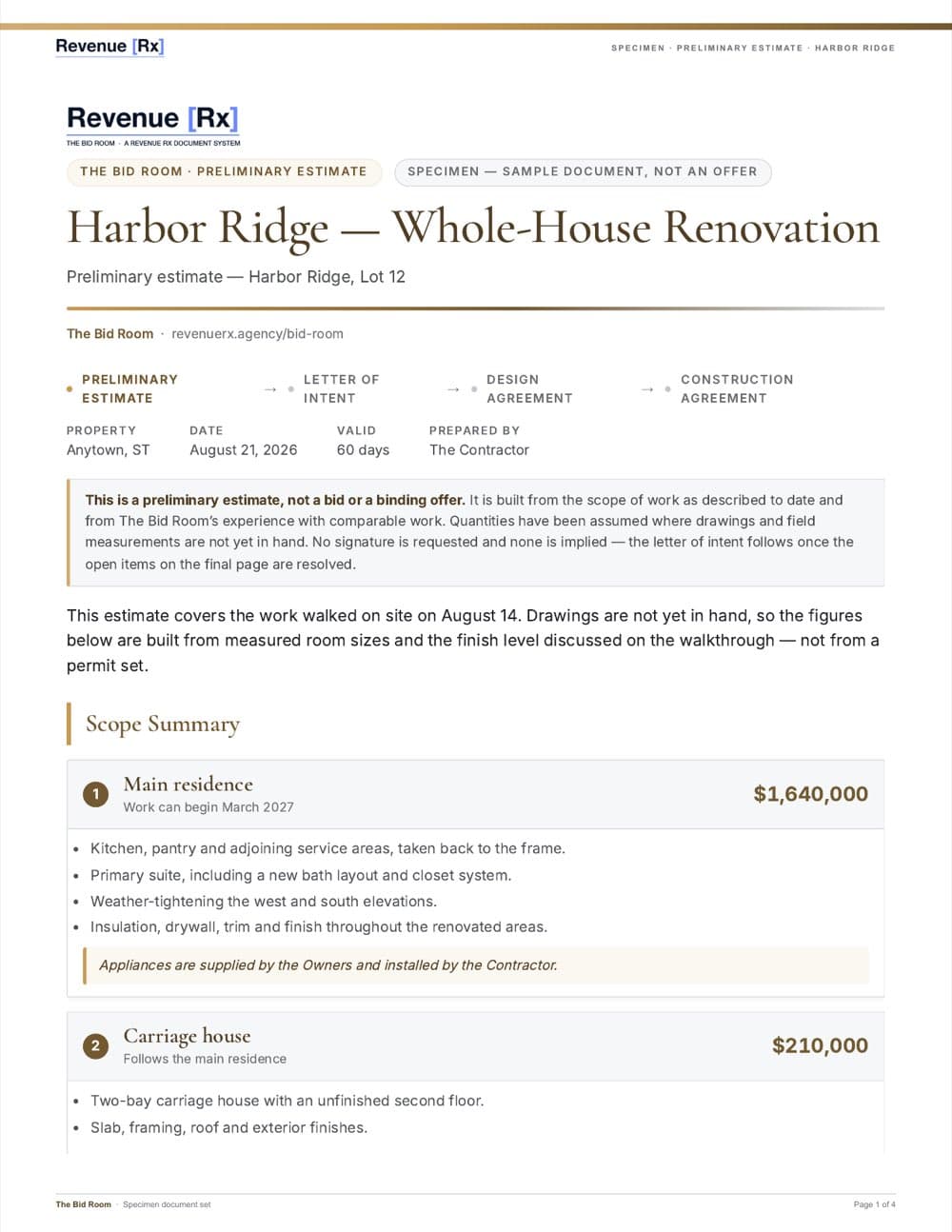
The estimate is the first document on a job and the only one in the suite nobody signs — which is the point. It puts a real figure and an honest range in front of an owner without turning an assumption into an offer. Four pages, in your brand, the same way every time.
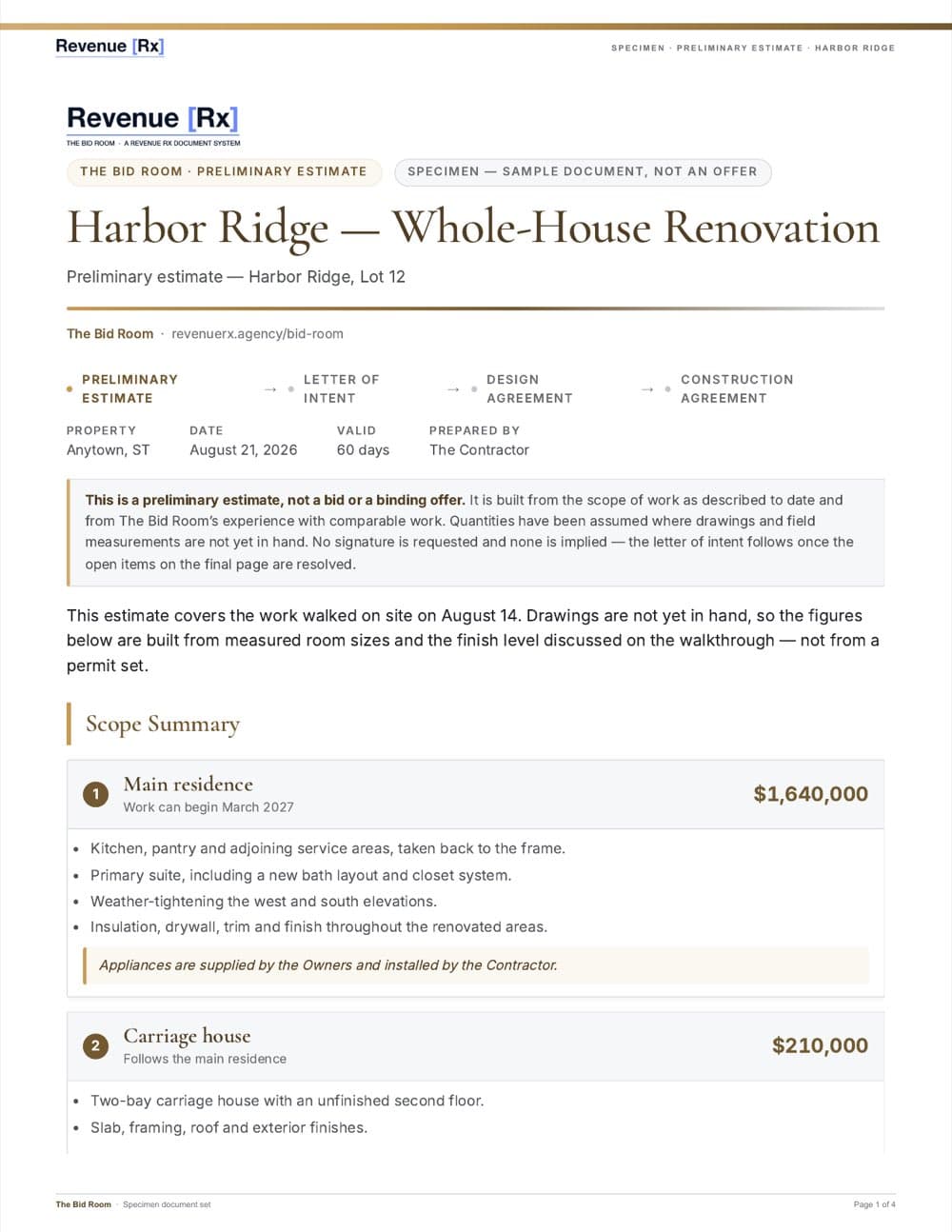
Cover, the strip showing where this sits among the four, and the notice that does the real work: this is an estimate, not a bid, and nothing here asks for a signature. Read that to the owner rather than letting them find it.
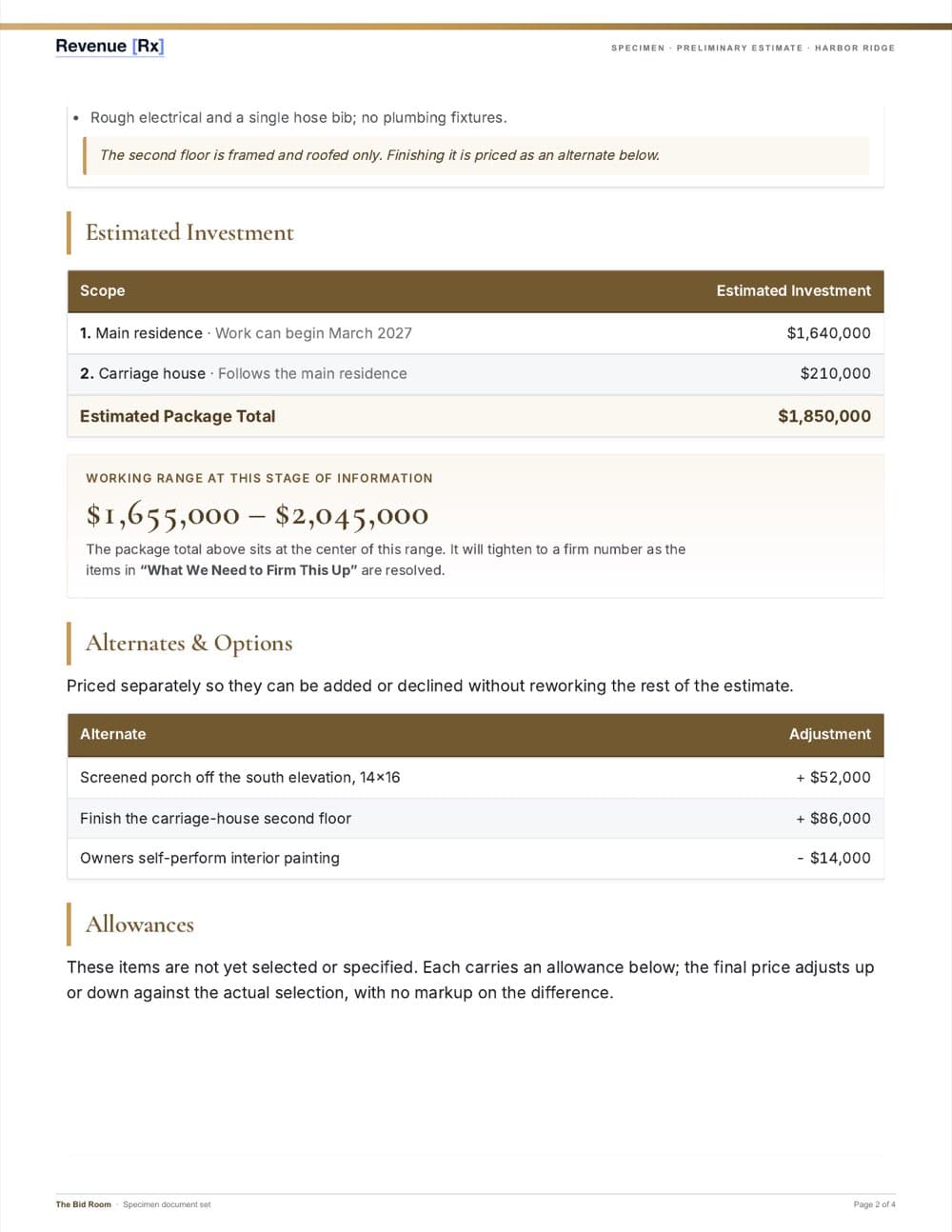
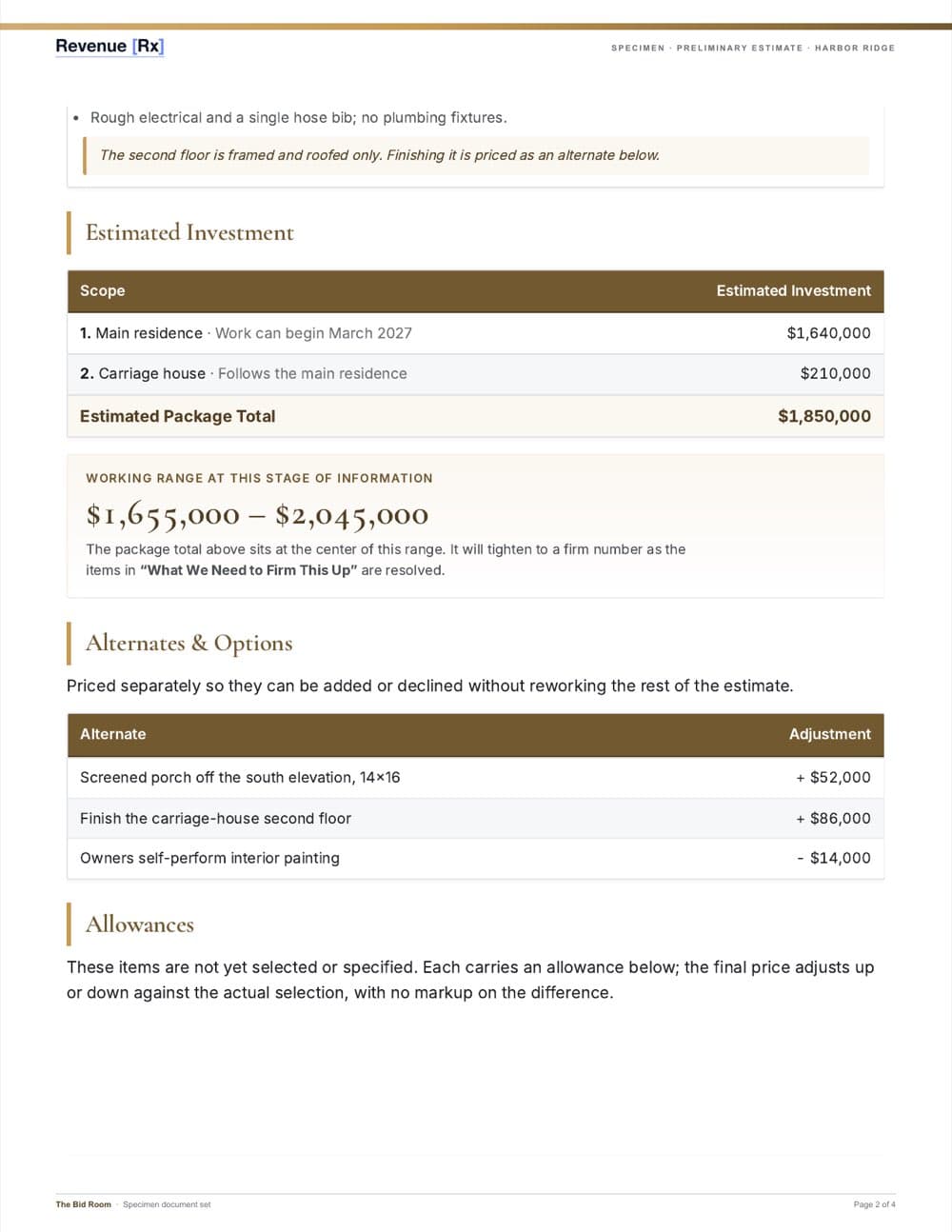
The roll-up closes and the total lands, with the working range directly beneath it. Then the two lists that let an owner move the number without anyone re-cutting the document: what they might add or drop, and what they haven't chosen yet.
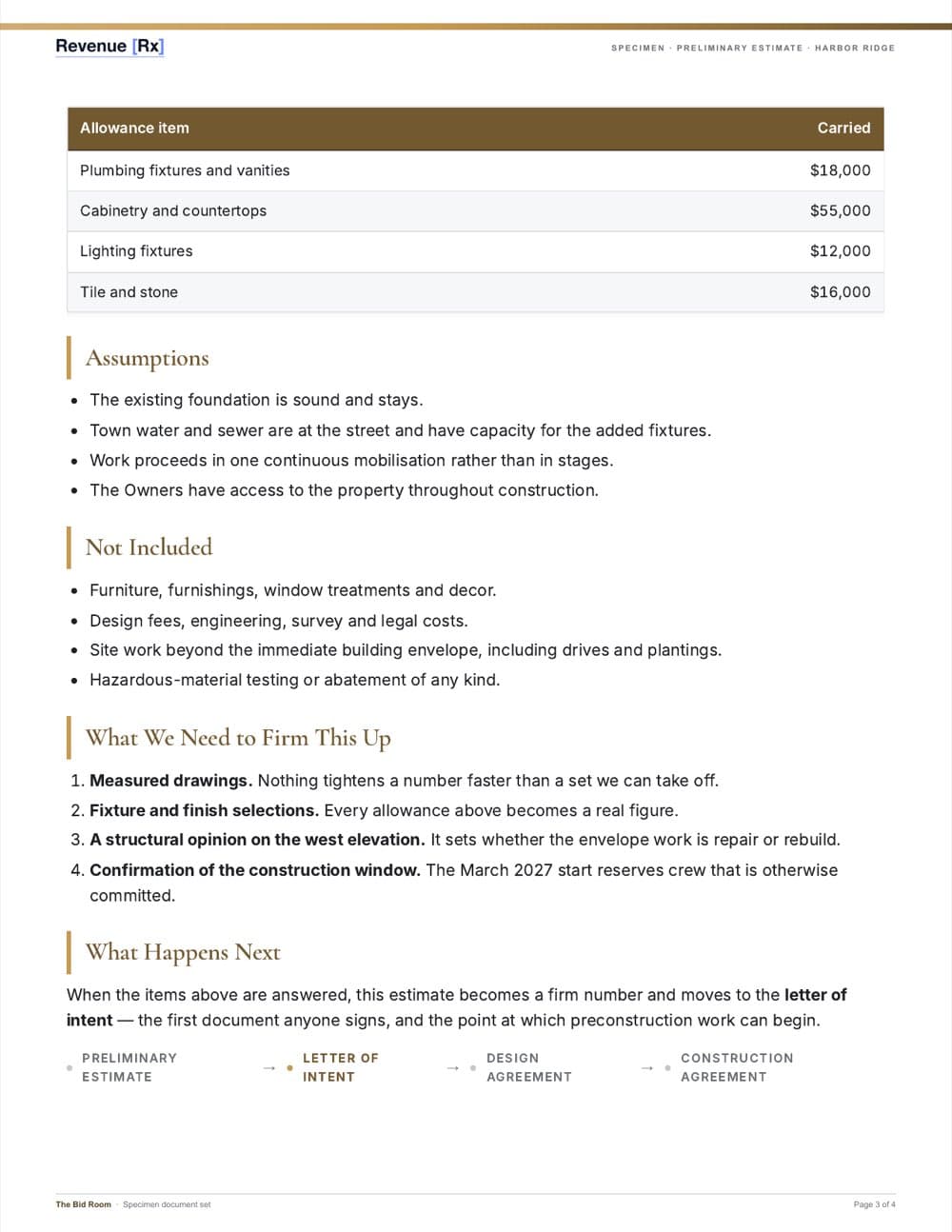
What you priced as if true, and what you are not carrying at all. Furniture, window treatments, design fees, engineering, survey, site work beyond the envelope, hazardous material. Dull to write, and the cheapest eleven months you will ever buy.
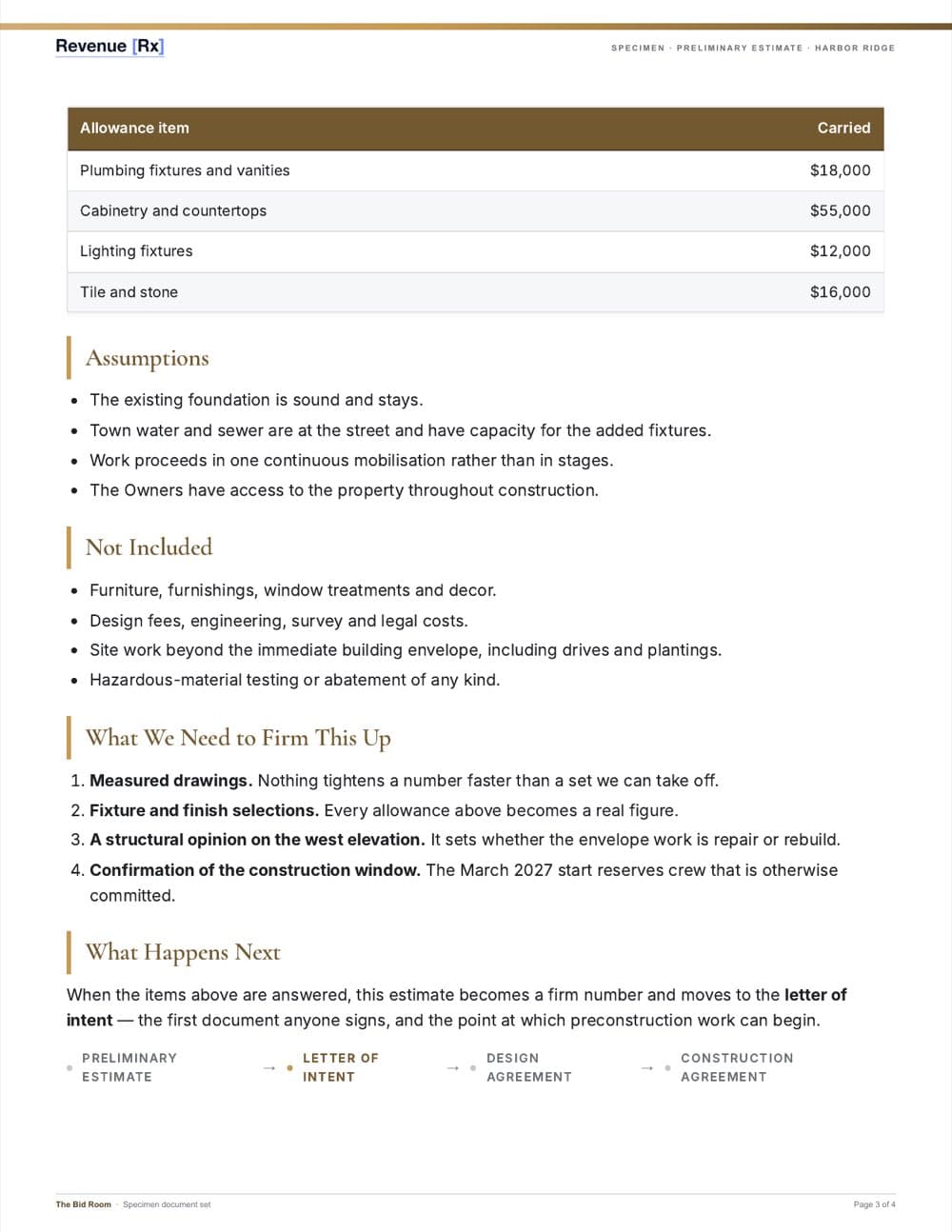
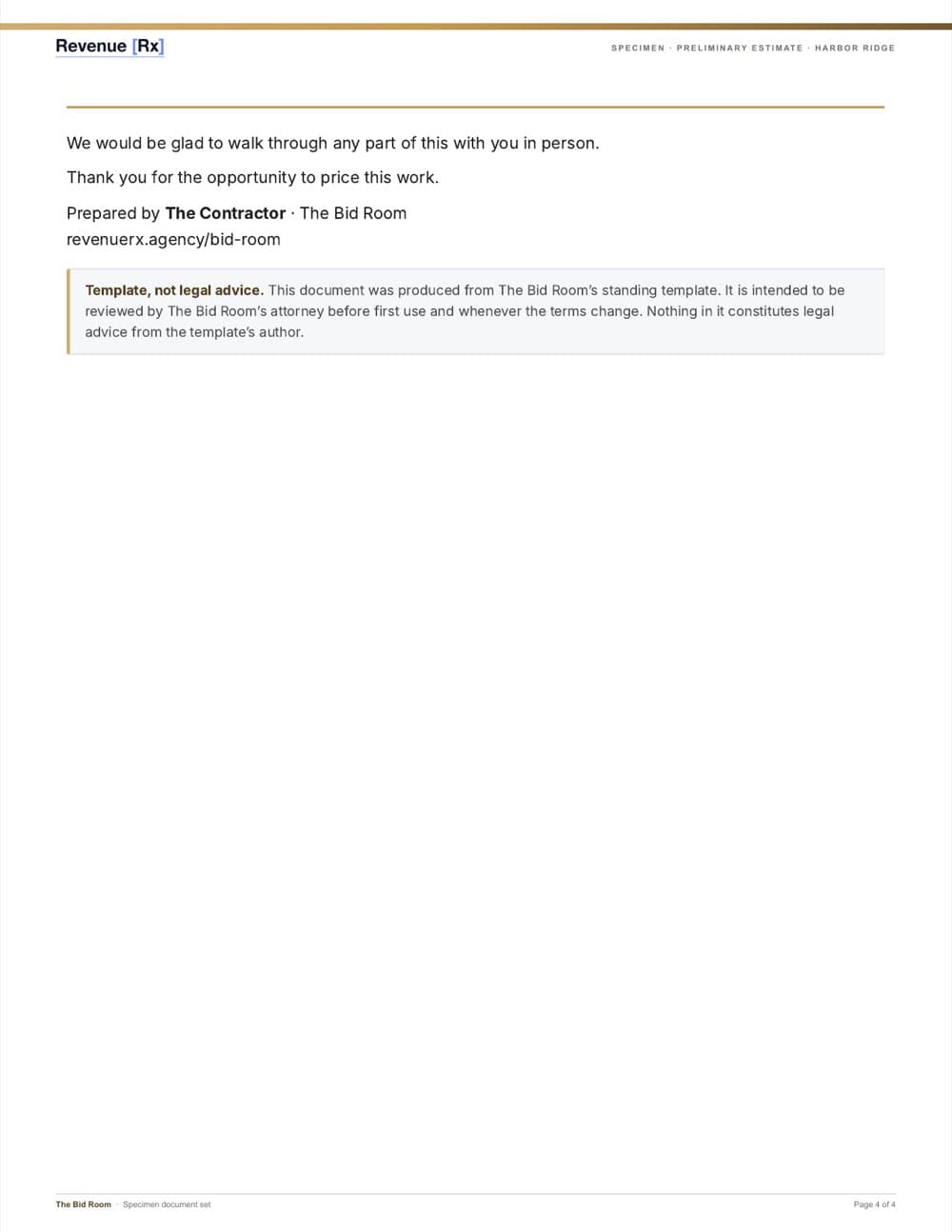
What has to be answered before this becomes a firm number — measured drawings, selections, a structural opinion, a confirmed construction window — and then the handoff to the letter of intent, which is the first thing anyone signs.
No forms, no portal, nothing to learn. Six answers, in whatever form you already keep them — a walkthrough, a voice note, a marked-up plan. The document comes back in your brand.
Who it is for, where it is, and what the work should be called on the cover. One line each.
Split the work into the parts you would price separately.
A few lines of plain language per piece, and the figure you have worked out for it. How you got there stays yours.
Fixtures, cabinetry, counters, tile, lighting. Anything still unselected carries an allowance and settles later against the real choice.
What you are assuming is true, and what you are not carrying. This is the section that ends arguments, so it is worth five minutes.
Drawings, selections, a soils answer, a town review. Whatever is still open becomes the last page — and the last page is what moves the job to a signature.
The estimate is where it starts. Each document hands off to the next and every one comes out of the same engine in your colours — so the fourth looks like the first.
The number, its range and the open items. Nothing is signed.
You are here · 4 pagesThe first signature. Reserves capacity and pays for preconstruction.
View specimenDrawings, selections and the budget that comes out of them.
View specimenThe contract that puts crews on site.
View specimenSend the drawing, the photo, or a bid you already wrote. Back comes a ten-point scorecard on that document and a proposal cover carrying your own mark. No charge, by email, and your phone stays quiet unless you ask it not to.
Or skip the form and call (617) 397-5663. Mon–Fri, 8 to 6 Eastern.